Lessons in Investing - Compounding
By David Walker

One benefit of investing is Compound Interest.
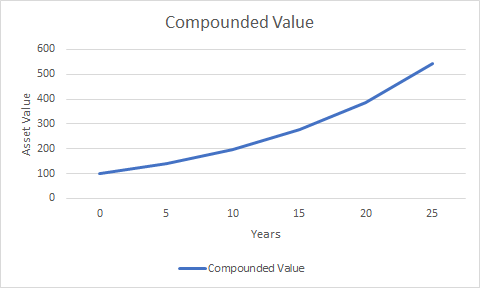
Compound interest is the annual return that's added to the principal amount invested; which then rolls over and builds on as the years go by.
Compound interest is what makes your money grow in your retirement account over time. Picture a ball of snow rolling down a mountain as time goes on it gets bigger and bigger that's how compound interest works. As time goes on the money you invest can grow and when it does you get a yearly return based on how well you invested.
If used wisely you can make a big return on your investments. One important thing to know though is the economy is unpredictable and there might possibly be years where your investments don't make profits. But the key is to keep on investing no matter where the market is, because in the long run if you invest well and let compound interest do its thing you might have a nice retirement fund waiting for you once you retire.
One thing that investment professionals say is that the sooner you start investing and giving your investment more years to build compound interest on the principle is more likely to be profitable for retirement.
One thing to remember when looking at compound interest is that it doesn't normally happen overnight. Generally, if you invest smart compound interest will build up over decades. So, keep putting money away every year and trust the process. That's one of the smartest things to do.
It's important to stay consistent with your investments. The more that you remain invested can increase your odds by giving compound interest more room to work with. While there's no way to know for sure how your investments will go, if you get guidance from a financial advisor on what to invest in and trust the system of compounding there can be a better chance for you to be successful.
The formula used to find compound interest is A=P(1+r)^t
A: represents the final amount.
P: is the initial principal amount.
r: is the interest rate
t: is the number of time periods elapsed